
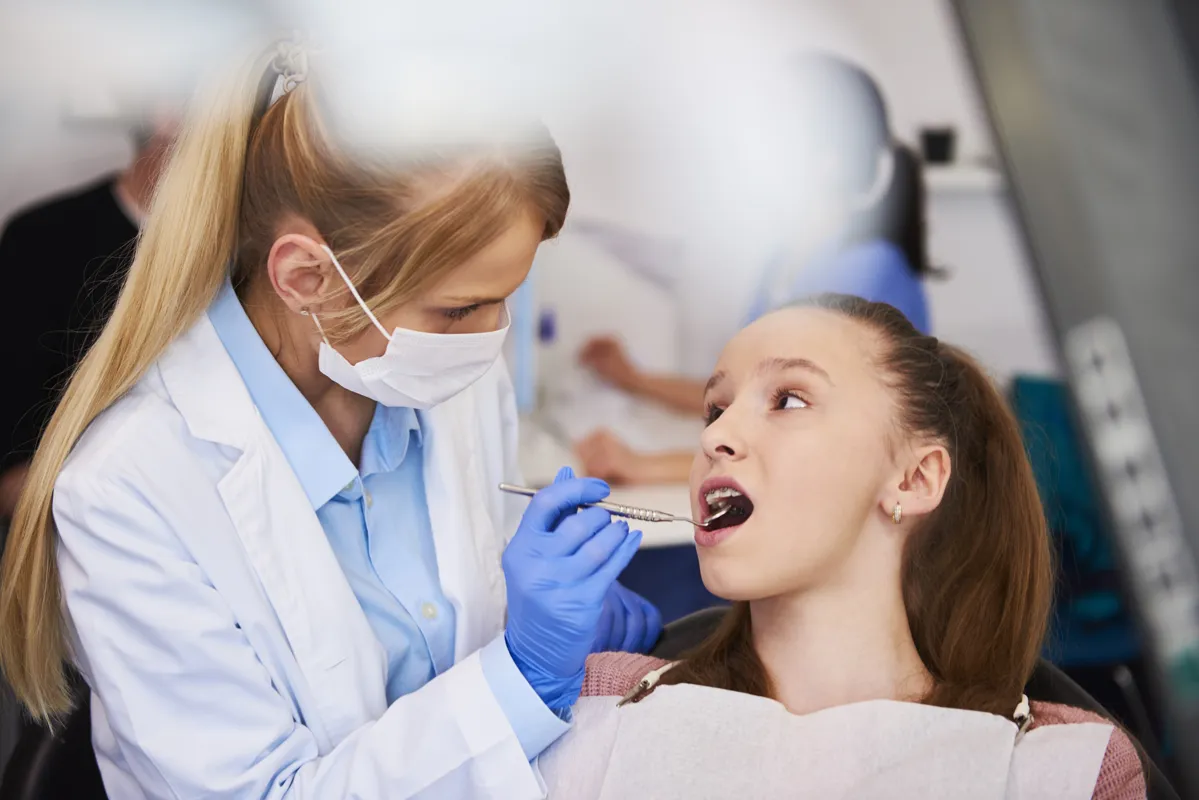
A lot of what people hear about orthodontics is passed on by word of mouth. Some of it keeps people away from treatment for no good reason, and some of it creates expectations that treatment cannot meet. Below we go through ten of the most common misconceptions one by one, based on what the scientific literature and clinical experience say, with a short statement of the facts followed by a more detailed explanation.
Myth 1: Orthodontic treatment is only for children
Fact: Teeth can be moved at any age, as long as the surrounding bone and gums are healthy.
The biological process that makes tooth movement possible, the slow remodelling of the bone around the tooth, continues into adulthood. In adults this process may run a little more slowly, and it is no longer possible to guide jaw growth, so some skeletal problems cannot be fully corrected by moving the teeth alone. Crowding, gaps between the teeth, most bite problems and shifting after earlier treatment can, however, all be treated in adulthood.
Much adult treatment is carried out for function rather than appearance: crowded teeth are harder to clean, which can raise the risk of gum disease. Moving teeth into a suitable position before an implant, bridge or crown also allows those treatments to be planned more soundly. In children, orthodontics has a different advantage: while growth is still under way, the development of the jaws can be guided. This is covered in detail on the children's orthodontics page.
Myth 2: Orthodontic treatment is very painful
Fact: What people feel during treatment is usually a few days of pressure and tenderness rather than pain, and the level varies from person to person.
No local anaesthetic is needed when brackets are bonded or when clear aligners are fitted for the first time, because these procedures take place on the surface of the tooth. Tenderness is usually felt in the first one to three days after the wire is placed, after a wire change or after switching to a new aligner. The most commonly described experiences are tightness in the teeth when chewing, a preference for soft foods, and irritation from brackets rubbing against the inside of the cheek.
These complaints mostly ease on their own. When needed, a simple painkiller recommended by your dentist, orthodontic wax placed over the brackets and a soft diet in the first days make things easier. Modern archwires are also designed to apply lighter, more continuous forces, which has made treatment more comfortable than in earlier decades. Saying "orthodontics is painful" exaggerates this temporary and manageable tenderness; saying "you will not feel a thing" is not realistic either.
Myth 3: Orthodontic treatment takes years
Fact: Active treatment lasts between 12 and 24 months in most cases; simple cases can be shorter and complex ones longer.
The main factors that determine duration are the type and severity of the problem, whether any teeth need to be extracted, the patient's age and bone structure, the method used and, perhaps most importantly, how well the patient follows instructions. Treatment takes longer in patients who are asked to wear elastics but do not, who do not wear their clear aligners for the recommended hours each day, or who keep postponing appointments.
Various techniques and devices are claimed to shorten treatment, but the scientific evidence on their effect is limited and they do not give the same result in every patient. A realistic estimate of duration can only be given as a range, after the examination and records have been reviewed.
Myth 4: Orthodontic treatment damages the teeth
Fact: With properly planned and regularly monitored treatment, the risk of lasting damage to the teeth is low; there are known risks, and these are monitored.
One known side effect of orthodontic treatment is root resorption: slight shortening at the tips of the roots. In most patients this shortening is very small and does not affect how long the tooth lasts. Rarely it can be more pronounced, which is why follow-up X-rays are taken during treatment and the plan is changed if necessary. The other risks are decay and gum inflammation caused by poor hygiene. These relate more to care than to the treatment itself.
On the other hand, untreated crowding and bite problems also have a cost: excessive load on some teeth, abnormal wear and gum problems in areas that are hard to clean. So the real question is not "does orthodontics cause damage?" but "do the benefits of a well-planned and well-monitored treatment outweigh its risks?" In a suitable case, the answer is usually yes.
Myth 5: Orthodontic treatment is too expensive for most people
Fact: The cost varies widely with the complexity of the problem, the method chosen and the length of treatment; talking about a single figure is misleading.
Treatment with metal brackets may have a different cost structure from treatment with ceramic brackets or clear aligners. A short, limited correction is not the same as comprehensive treatment lasting two years. For this reason, general figures found online say very little about your personal plan. Once your problem, your options and the scope of each option have been discussed at the examination, you can assess the picture realistically.
It also helps not to think of cost only as the fee for treatment. An untreated bite problem can, over the years, lead to wear, fractures, gum problems and more extensive restorative work.
Myth 6: Braces cause tooth decay
Fact: Braces do not cause decay; plaque that builds up around them and is not cleaned away does.
Brackets and wires create new nooks and ledges on the tooth surface where bacteria can settle. If these areas are not cleaned well, white spots (early demineralisation) and then decay can develop in the enamel, especially around the brackets. The risk is real, but the cause is inadequate cleaning and dietary habits, not the braces themselves.
To reduce the risk:
- Brush after every meal, and at least twice a day, cleaning both above and below the brackets.
- Use a floss threader that fits under the wire, or interdental brushes.
- Use a fluoride toothpaste; if your dentist considers it necessary, additional fluoride applications may be recommended.
- Limit sugary and acidic drinks, especially those sipped throughout the day.
- Talk to your orthodontist about your oral hygiene at follow-up visits.
For bracket types and care details during treatment with braces, see the dental braces page. If decay is found during treatment, it can usually be dealt with by an appropriate filling around the bracket.
Myth 7: Wisdom teeth coming through make the front teeth crooked
Fact: Research has not shown wisdom teeth to be the main cause of crowding in the front of the mouth; late crowding depends on several factors.
Many people notice their lower front teeth shifting in their twenties and link this to the wisdom teeth trying to come through at the same time. Because the timing overlaps, the connection seems plausible. However, studies have reported similar late crowding in people who never had wisdom teeth or who had them removed earlier.
Factors thought to play a role in late crowding include late growth of the lower jaw, the lifelong tendency of teeth to drift slightly forwards, forces from the lips and tongue, and age-related changes in the gums and bone. For this reason, removing wisdom teeth simply "to stop the teeth from going crooked" is not a generally recommended approach. If a wisdom tooth does need to be removed, the reason should be other clinical findings such as impaction, recurrent inflammation, decay or damage to the neighbouring tooth, and the decision is made after an oral surgery assessment.
Myth 8: Once treatment is over, teeth stay straight for life
Fact: Without retention, teeth can gradually drift back towards their original position.
Orthodontic treatment also stretches the connective tissue fibres around the teeth. These fibres, especially around teeth that have been rotated, tend to pull back towards the old position for a long time. In addition, teeth move slightly throughout life, even in people who have never had orthodontic treatment. Finishing treatment does not stop this natural process.
That is why a retention phase follows active treatment. A fixed wire bonded to the inner surface of the front teeth, a clear retainer worn at night, or both together may be used. The current approach is for retention to continue long term, and indefinitely for most patients. Most patients who say "my teeth have gone crooked again" years after treatment turn out to have stopped wearing their retainer at some point.
Myth 9: Clear aligners work in every case
Fact: Clear aligners are an effective option in many mild and moderate cases, but they are not the answer to every orthodontic problem.
Aligners work by applying small, planned forces to the teeth. Gaps, mild to moderate crowding and some bite problems can be treated this way. On the other hand, in severe skeletal discrepancies, when impacted teeth need to be brought into the mouth, or when a great deal of root movement is required, aligners alone may have limited effect. These cases may need fixed treatment, a combined approach or a plan supported by jaw surgery.
The second important point is patient compliance. An aligner only works while it is in the mouth, and 20 to 22 hours of wear a day is recommended. For someone who cannot keep up that discipline, even a technically suitable case can run into problems. How the method works and who it suits are explained in detail on the clear aligner treatment page.
Myth 10: Orthodontics is purely cosmetic
Fact: Appearance is an important motivation, but orthodontic treatment also has functional benefits for chewing, cleaning and the long-term preservation of the teeth.
Well-aligned teeth are easier to clean. A correct bite helps spread chewing forces evenly across the teeth and can reduce the risk of overloading and abnormal wear on some teeth. Upper front teeth that stick out noticeably are more exposed to knocks and injuries. In some speech problems, the position of the teeth can be one of the contributing factors. The position of the teeth is also decisive when planning treatments such as implants, crowns or smile design.
Care is needed when it comes to jaw joint problems: current evidence shows that orthodontic treatment neither reliably prevents temporomandibular joint disorders nor treats them on its own. Jaw joint complaints need a separate assessment.
A quick way to tell myths from facts
To judge whether something you have heard about orthodontics is reliable, it helps to ask these questions:
- Does it say "always" or "never"? In biology, absolute statements are usually misleading.
- Is it based on one person's experience? What happened to one person may not happen the same way to someone else.
- Is timing being confused with cause and effect? As the wisdom tooth example shows, two things that happen in the same period are not necessarily cause and effect.
- Is it trying to sell a product or method? Claims that promise a particular duration or result deserve caution.
For the general framework of orthodontic care, when it is needed and what the treatment options are, see the orthodontic treatment page.
How is an orthodontic assessment carried out?
An orthodontic assessment consists of a clinical examination, X-ray and photographic records where needed, and a review of these records. At the examination, the orthodontist discusses whether the problem is dental or skeletal, whether treatment is needed, which options are suitable if it is, and a likely time range. At Yetkindent Oral and Dental Health Polyclinic, located in YDA Center in Çankaya, Ankara, orthodontic assessments are carried out by our specialist orthodontist. Treatment planning requires an in-person examination, and because orthodontic treatment runs over many months, you need to be able to attend regular follow-up visits in Ankara. If you have questions, you can contact the polyclinic.
Frequently Asked Questions
Is there an age limit for orthodontic treatment?
There is no specific upper age limit. As long as the teeth and supporting tissues are healthy, adults can be treated too. For children, a first orthodontic check-up is generally recommended at around the age of 7.
Is local anaesthetic used when braces are fitted?
Usually not. Brackets are bonded to the tooth surface and the procedure does not reach the nerve of the tooth. Tenderness in the first days is managed not with anaesthetic but, if needed, with painkillers and soft food.
My teeth feel loose during treatment. Is that normal?
For teeth to move, the connective tissue around them loosens temporarily, so a slight feeling of looseness is expected during treatment. If you have marked pain, swelling or increasing looseness in a single tooth, contact your orthodontist without waiting for your next appointment.
Can orthodontic treatment start without removing my wisdom teeth?
In most cases, yes. Removing wisdom teeth is not a routine precondition for orthodontic treatment. Whether to extract is assessed individually, according to the condition of the tooth and the treatment plan.
How long do I need to wear my retainer?
The current approach is for retention to be long term, and indefinite for most patients. Longer daily wear is usually recommended at first, followed by night-time wear only. Your orthodontist sets the wear schedule.
Are clear aligners or braces more suitable?
There is no general answer to this question. The type of problem, the complexity of the movements needed and your ability to wear aligners consistently are assessed together. In some cases one method is clearly more suitable; in others, both may be options.
This content is for information only and does not replace an examination or diagnosis. The treatment that suits you is decided together with your dentist after a clinical examination and any necessary tests.